


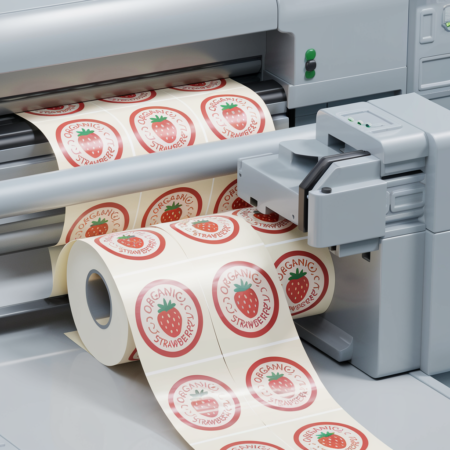

Label production is an industry that is constantly evolving, adapting to market needs and new technologies. What will 2025 bring? Here are the top 6 trends that will change the face of label design and production. If you want to stay up to date and offer your customers the best, be sure to check out what to follow in the near future.
1. Smart label production – the future at hand
Smart labels are gaining popularity and will be one of the key trends in 2025. Equipped with NFC technology or QR codes, they allow consumers to get additional information about a product using their smartphone. This is a revolution in customer interaction.
Companies can use them to tell a brand story, provide details about ingredients or even enable supply chain tracking. Producing labels with smart features requires investment in the right technology, but opens up entirely new marketing opportunities.
2. Sustainable label production and eco materials
Eco-trends are not slowing down. More and more companies are choosing to use biodegradable or recycled materials for their labels. Customers are paying attention to their carbon footprint and choosing brands that care about the environment.
FSC-certified paper, water-based inks or labels made from recycled film are just some of the solutions that are triumphing. Printers investing in green practices can count on greater customer trust and new orders.
3. Personalization at a higher level
Personalization is not only about names on labels, but also about customization for individual market needs. In 2025, there is a growing demand for short runs of products with unique labels, especially in the food and cosmetics industries.
Modern printing presses make it possible to print quick, personalized series without the need for customization. This is an excellent tool for companies organizing marketing campaigns or testing new products on the market.
4. Minimalist design vs. label production
Trends in graphic design are changing rapidly, but minimalism still prevails. A clean, clear design with clear typography and simple shapes helps to better display the product on the shelf.
In label production, minimalism goes hand in hand with material quality. Customers are increasingly opting for high weight paper, embossing or matte finish. Such appearance attracts attention and emphasizes the prestige of the product.
5. Hybrid printing – the best of both worlds
Hybrid printing combines the advantages of digital and traditional printing. It makes it possible to create labels with high image quality, but at lower production costs for larger runs.
With this technology, printers can handle orders at different stages of production without having to purchase several machines. Hybrid machines are versatile and perfect for even the most demanding projects.
6. Multilayer labels – little space, lots of information
Multilayer labels are the answer to growing information needs. Pharmaceutical, cosmetic or chemical products require detailed descriptions that do not fit on one side of the label.
With multilayer labels, instructions in several languages can be accommodated without changing the size of the packaging. The production of such labels requires precision, but the results are impressive and greatly facilitate customer service.
Summary
The year 2025 will bring many exciting changes in label production. Smart technologies, sustainable materials, personalization, minimalism, hybrid printing and multi-layer labels are just some of the key trends that will shape the future of the industry.
Printers who want to stay one step ahead of the competition should follow these changes and adapt their services to new market requirements. Label production is a dynamic area where innovation never stops. Have questions or need support with your project? Contact us – together we will create labels that will impress!