



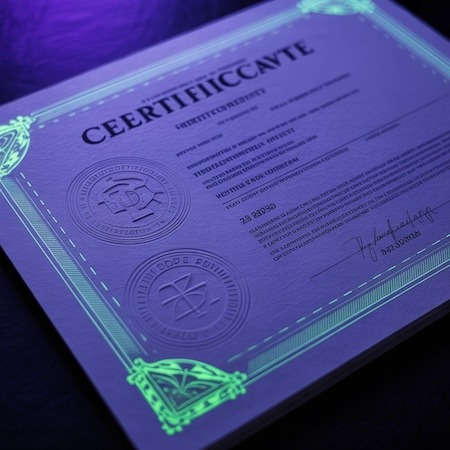

Wondering if it is possible to secure printed materials against copying, forgery or unauthorized duplication? Secure printing today is not just the domain of banknotes and government documents. Premium brands, publishers of collectible books, creators of card games or label manufacturers are also increasingly turning to it. What solutions are available? When is it worth reaching for them? Here’s a guide to the world of security printing.
Secure printing – why consider it at all?
In an age of easy access to scanners, HD cameras and digital printing technology, copying materials has never been easier. And that’s why more and more customers are turning their attention to secure printing as a way to protect intellectual property, brand image or sensitive data.
Security can work on several levels:
- physical (e.g., through materials that cannot be counterfeited),
- optical (special effects visible only under UV light),
- technological (e.g., variable data printed individually).
Importantly, these types of measures can be selected so that they do not affect the design – many of them are completely invisible to the end user, yet still perform a protective function.
UV paints and security varnishes
One of the most common solutions in secure printing is UV inks – that is, special pigments that react to ultraviolet light. What appears to the eye to be an ordinary sheet of paper can reveal watermarks, logos or production information under UV light.
UV protections have several advantages:
- Are invisible in normal light,
- do not affect the appearance of the design,
- are difficult to reproduce by home methods.
They are used, among other things, in elegant editions of books, certificates, vouchers, collector cards, and even in the packaging of luxury products.
Variable data printing and limited series
Another effective method is variable data printing (VDP). Each copy can contain a unique serial number, QR code, personalized data or identification mark. This approach makes copying more difficult and increases the sense of exclusivity.
In practice:
- Limited series of books include individual markings,
- certificates or diplomas have data assigned to one person,
- collector’s products are numbered to increase their value.
Personalization is not only a security measure, but also a way to increase audience engagement.
Security paper – difficult to counterfeit
It seems ordinary to the touch, but its structure hides fluorescent fibers, micro-text or watermarks. We are talking about a special security paper that makes forgery more difficult. It is used not only in documents, but also in exclusive editions of books, notarial deeds and wherever credibility and prestige count.
Interestingly, such paper can be combined with classic offset or digital printing techniques – it does not require major changes in the process, but significantly increases the level of security.
Secure printing – who is it for?
Not every project requires advanced security features, but they are worth considering if:
- You print certificates, vouchers, numerical documents,
- you offer limited edition products,
- you want to protect your brand from counterfeiting,
- you care about a professional, unique look.
Secure printing gives customers a sense of control, uniqueness and quality. And that translates into their trust and loyalty.