



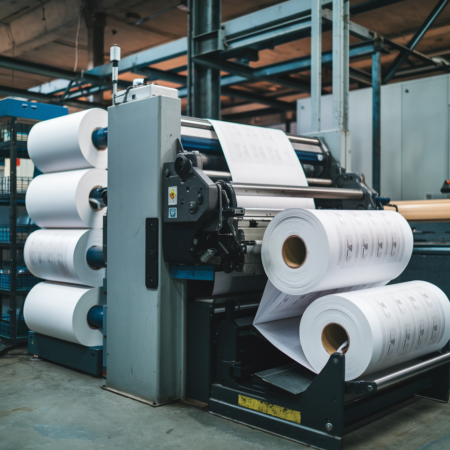

Technological changes are occurring at an express pace in the printing industry. Modern printing machines are becoming more and more efficient, eco-friendly and versatile. In this article, we’ll talk about 5 key innovations that are revolutionizing printing and helping printers deliver even better services to their customers. If you’re wondering what’s driving the growth of this industry, keep reading!
1. Printing machinery vs. process automation
Modern printing machines are equipped with automation systems that eliminate many manual tasks. From calibration to ink mixing to quality control, today’s machines can do it all themselves. As a result, turnaround times are significantly reduced, and printers can offer more competitive prices. Automation also reduces the risk of errors, which improves the quality of finished products.
For small and medium-sized printers, this means greater efficiency with less labor. Machines with automation features are becoming a standard on the market, and it’s worth investing in them to stay competitive.
2. Next-generation digital printing technology
Digital printing is not new, but its capabilities are constantly evolving. New digital printing presses offer higher print quality, faster speeds and the ability to handle increasingly complex projects. Importantly, digital printing allows for personalized, or customized, printing.
Personalization, such as printing with a customer’s name or individual numbering, is becoming increasingly popular. It’s great for marketing campaigns and short runs of products. Printers who invest in the latest digital technologies can offer their customers much more options.
3. UV printing – quality and durability
UV printing is one of the most innovative technologies in the world of printing machinery. In this method, the ink is cured using UV rays as soon as it is applied to the surface. The result? Extremely durable and light-resistant prints with intense colors.
Printing machines using UV technology allow printing on almost any material: paper, glass, metal and even wood. This opens up entirely new possibilities for printers. Such prints are ideal for outdoor applications, such as signs or banners, where durability is crucial.
4. Eco-friendly printing machines
The printing industry is increasingly focused on ecology. Modern printing machines are designed to minimize waste and save energy. Water-based inks, technologies that reduce chemical consumption or paper recycling systems are just some of the modern solutions.
For customers, the carbon footprint of a product is increasingly important. Printers that invest in eco-friendly printing machinery gain a competitive advantage. In addition, green practices translate into lower costs, which has a positive impact on profitability.
5. Development of artificial intelligence in printing machines
Artificial intelligence (AI) is also being applied to printing machines. AI-based systems analyze data from previous jobs, optimize machine settings and predict potential failures. This not only saves time, but also reduces the risk of downtime.
Thanks to artificial intelligence, printing machines can work more precisely and efficiently. AI allows printers to better adapt to customers’ needs, offering customized solutions and the highest print quality. This is a future that is already happening today.
Summary
Printing machinery has undergone a huge evolution in recent years, and new technologies never cease to amaze. Automation, digital printing, UV technology, green solutions and artificial intelligence are just some of the innovations that are changing the face of the industry.
For printers, investing in modern printing machinery means better products, lower costs and greater customer satisfaction. If you’d like to learn how these technologies can impact your business, contact us. Together we will find the best solutions for your needs!