


Grass paper is one of the most promising materials to appear in printing in 2025. It combines an eco-friendly approach with an unusual appearance and natural texture. Are you wondering whether it is worth using in your project? In this article, we will show you what grass paper is, where it works best, and what limitations you should be aware of before you start printing.
What is grass paper?
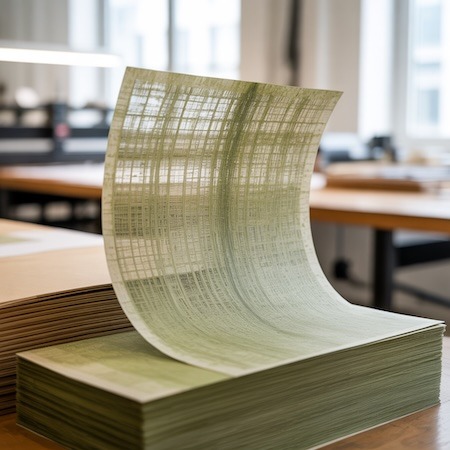
Grass paper is an alternative to classic wood-based paper, produced from dried meadow grass – most often from agricultural wasteland. Its advantage is not only a smaller carbon footprint, but also:
- significantly lower water and energy consumption during production,
- no need for chemical bleaching,
- rapid biodegradability.
Its texture resembles recycled paper with delicate plant fibers, often visible to the naked eye. This makes each sheet look slightly different, which is an added value for many brands.
Grass paper – where does it work best?
Although the material is gaining popularity, paper is not yet widely used. Currently, it is mainly used in:
- eco-friendly packaging (e.g., cardboard boxes, wrappers, inserts),
- promotional materials for eco-friendly brands: leaflets, tags, business cards,
- company materials for NGOs and companies focusing on CSR,
- labels for natural products, e.g., cosmetics or teas.
Importantly, this paper performs well in digital and offset printing, although it is always worth testing it beforehand, especially with dark backgrounds or small graphic elements.
Grass paper – advantages and disadvantages in practice
Advantages of grass paper:
- unique, eco-friendly appearance,
- positive impact on brand image,
- no intensive chemical treatment,
- good printability (especially with moderate graphics).
Disadvantages and limitations:
- slightly higher unit cost,
- lower color repeatability (compared to coated paper),
- not suitable for all projects – e.g., those with very saturated colors or refinements.
If your brand targets the premium or eco-friendly segment, this may be exactly what you are looking for. But if you care about sharp contrast and precision of details, it is worth testing samples before placing a full order.
Is this a temporary trend?
The current interest in this material is not only due to the eco trend, but also to the real need to find alternatives to wood-based paper. For companies that want to show their commitment to sustainable development, this type of paper is a great opportunity to stand out – and not only visually.
What’s more, some manufacturers are already introducing new versions – with the addition of flax, hemp, or grape leaves. It is therefore worth keeping an eye on this segment, as 2025 is only the beginning of its development.
Summary
Grass paper is a novelty that can change the way we think about printed materials. Although it is not suitable for every project, it offers interesting possibilities in terms of ecology, aesthetics, and brand communication. If you want your prints to be more “green,” contact us. We will help you choose the paper and printing technology that best suits your needs.