



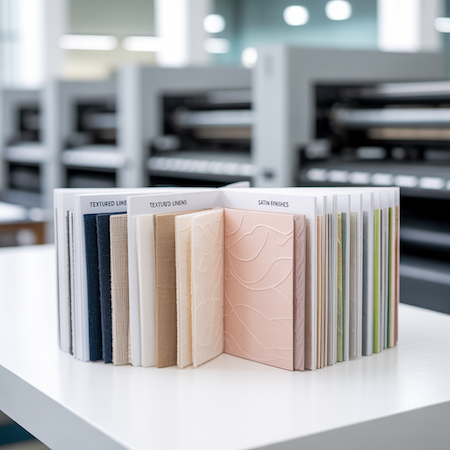

Decorative paper is one of the most effective ways to give printed materials a unique look and emphasize their uniqueness. The use of decorative paper makes the project more prestigious and visually appealing. However, before deciding on this material, it is worthwhile to think carefully about several aspects that will affect the final result and the cost of production. In this article, we outline four key things you should consider when planning to print on decorative paper.
1. Decorative paper – choice of texture and weight
The choice of decorative paper is the basis, which will largely determine the appearance and character of your project. Decorative paper comes in many variations. From smooth, matte surfaces, to paper with a distinct texture, to glossy or metallic finishes. Each of these options brings a different visual and tactile effect. It’s worth considering what effect you want to achieve.
Paper weight is another important parameter. Heavier paper is more durable and gives the impression of higher quality. But at the same time it raises costs and can affect the way you print and further processing. Typically, the grammage of decorative papers is in the range of 120-350 gsm. The choice should be tailored to the nature of the material and its function.
For example, if you are planning business cards or invitations, a decorative paper of about 250-300 gsm with a delicate texture that will add elegance will work well. On the other hand, for catalogs or brochures, a lighter weight paper may be better, so that the material is not too heavy.
2. Decorative paper – compatibility with printing technique
Not every decorative paper is universal and suitable for every printing technology. Offset printing, digital printing or screen printing have different requirements for the type of substrate. So before deciding on a particular paper, it’s a good idea to consult a printing company to see if a particular paper is compatible with your chosen printing technique.
For example, some highly textured papers may not accept ink evenly or may cause problems during finishing. This might affecting the quality and durability of the print. Glossy paper, on the other hand, may require special preparation to ensure that colors are vibrant and well reproduced.
It is also good practice to make a test print on the selected decorative paper, which helps minimize the risk of surprises during actual production. This allows you to adjust machine settings and printing parameters on the fly.
3. Refinements and finishes
Decorative paper often forms the basis for various types of finishing, which enhance the aesthetics and durability of printed materials. Among the most popular finishes are selective varnish, matte or glossy foiling, embossing and hot stamping.
However, it is important to check which finishes are compatible with the selected decorative papers before executing the project. Some paper textures may limit the applicability of certain techniques. For example, foiling on very rough surfaces may not produce the desired effect, and embossing on thin paper may lead to damage.
With the right combination of decorative paper and enhancements, you can achieve truly spectacular effects that will set your product apart from the competition. However, each additional layer or technique can also affect the cost and production time, so it’s worth planning ahead.
4. Decorative paper – costs and minimum print runs
The decision to choose decorative paper involves higher costs than printing on standard papers. Paper tends to be more expensive, and availability can be limited, sometimes forcing higher minimum orders.
When planning your budget, it’s worth taking into account not only the price of the paper itself, but also potential additional costs associated with print preparation, finishing and possible proofing. Larger print runs, on the other hand, may allow for a lower unit price, but mean a higher overall expense.
For this reason, it is always a good idea to talk to the printer and determine the optimal print run and possible material variants. This will make the project not only impressive, but also economical.
Summary
Decorative paper is an excellent choice if you want to distinguish your printed materials and give them a unique character. Remember, however, that choosing the right texture, grammage, compatibility with your printing technique, and cost planning are key elements that will affect the success of your project.
Do you have questions or need help choosing a decorative paper? Contact us – our experts will help you select the best solutions that will meet your expectations in terms of both aesthetics and budget.